





I’ve built tech companies. I’ve shipped platforms that worked — and plenty that didn’t.
I’m a former developer turned (sometimes frustrated) CEO. Over the years I’ve worked with developers of every kind: brilliant and average, motivated and checked out, junior and world-class. I’ve written specs, managed roadmaps, and lived through the painful reality that execution is everything.
Today, we’re in a spectacular era.
AI is not just “another tool.” It’s changing the cost of building, the speed of testing, and the number of opportunities a small team can realistically pursue. I call it the POQ world: Productivity, Opportunities, Quality.
But here’s the part nobody says out loud enough:
Most AI “coding” experiences still feel like working with a junior developer who agrees with everything… and understands nothing.
For the last few months, I experimented seriously with Replit. On paper, it’s an amazing idea: a “developer” that ships for you. In practice, I burned an absurd amount of credits getting basic fundamentals right (yes—things as simple as a registration flow). Too much iteration, too many fixes that created new issues, too little true understanding of architecture and edge cases.
So I switched to Claude.
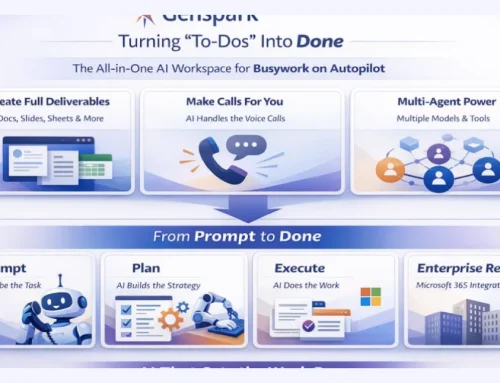
Why Claude? Because Genspark — my favorite AI platform right now — relies on it, and I wanted more control and more horsepower than my current Genspark limits allow for app development. I’ll share more feedback as I go.
For now, here’s my very subjective scorecard after months of hands-on use:
- Gemini: 3/5
- ChatGPT: 4/5
- Genspark: 5/5
- Replit: 1/5
Now, beyond my personal frustration, here’s what I think is really happening in the market — and why the opportunity is massive.
The market opportunities I see (where real money will be made)
A) The “AI Product Engineer” layer (spec → architecture → tickets → code). Most AI coding fails because it jumps straight into implementation without a blueprint. A dev app that reliably converts a spec into user stories + acceptance criteria, a data model, an API contract, and a coherent repo/ticket plan will save teams weeks of thrash.
B) Verification-first tooling (QA, tests, “definition of done” automation). The biggest hidden cost isn’t writing code — it’s rework. The dev apps that matter will validate builds from scratch, generate tests that match acceptance criteria, and stop regressions before they hit production.
C) Security/compliance DevOps for AI-generated code. The enterprise market is wide open for solutions that add governance to AI output: secrets handling, license compliance, SAST/DAST, audit trails, gated approvals, and policy enforcement.
D) Integration copilots (because wiring systems is the real work). Most business apps are glue: CRM ↔ billing ↔ analytics ↔ email ↔ data warehouse. The opportunity is huge for tools that make integrations reliable (mapping, retries, idempotency, observability, version drift handling) instead of “best-effort code generation.”
E) Vertical micro-SaaS factories (templates + connectors + compliance baked in). In many industries, the “apps” are the same patterns repeated with different branding and workflows. Building verticalized factories — with the right primitives and compliance built-in — will print value for customers who don’t want to reinvent the wheel.
The big lesson so far: AI doesn’t replace product thinking. It amplifies it. If your specs are fuzzy, your architecture unclear, and your acceptance criteria weak, AI will happily “ship” confusion at scale.
And that’s my punchline:
The next wave of dev apps won’t win by generating more code. They’ll win by reducing rework — through architecture, guardrails, and proof.
Curious: what’s your real-world experience building with AI tools? Which platform actually helped you ship?